
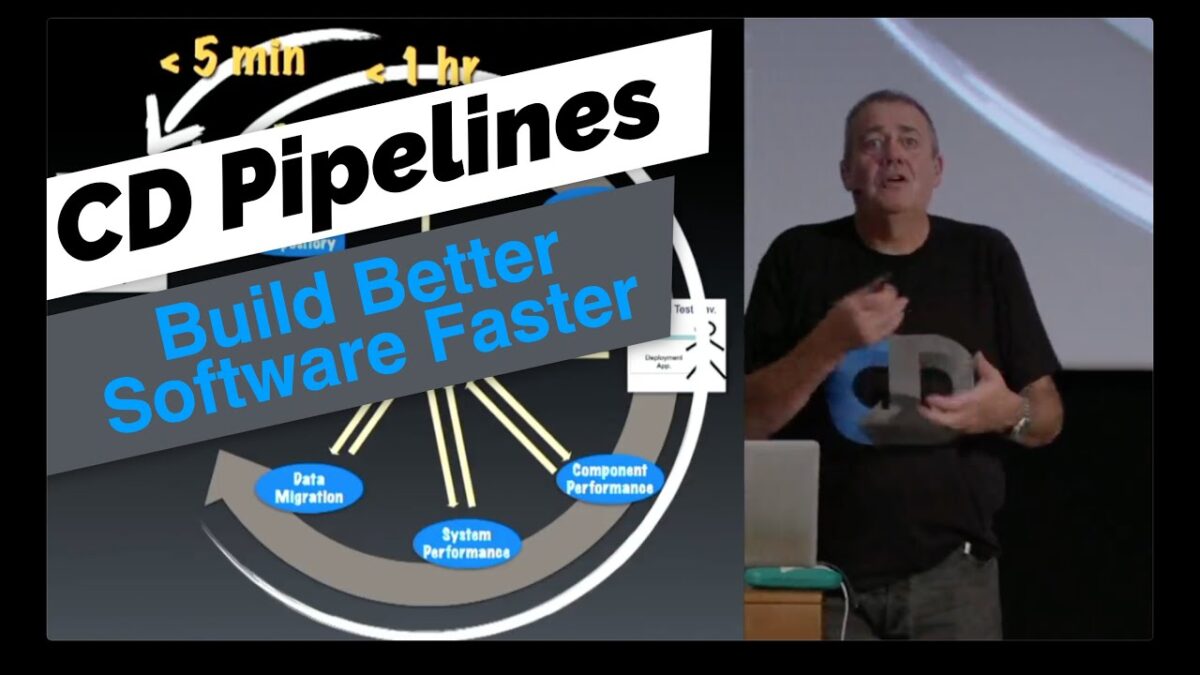

Continuous Delivery (CD) ensures validated code can be released to production at any time. This helps detect bugs, security vulnerabilities, and integration issues early, reducing the risk of failures in production. It includes continuous integration, automated testing, infrastructure provisioning, monitoring, and feedback loops as part of a full software delivery lifecycle. It builds, tests, deploys, and monitors applications using defined stages, reducing manual work and improving reliability. CD takes the CI process further by automating the deployment of tested and validated code changes to production environments.

A software as a service (SaaS) product team aiming to ship 10+ updates daily would find manual approval gates impractical, so continuous deployment makes more sense. Continuous delivery pipelines build on the foundation of continuous integration (CI), the practice of merging code frequently and running automated tests to catch issues early. These automated workflows rely on strong data integration and clear communication so every team can see progress and identify issues early.

The build also undergoes a battery of tests for integration — ensuring that the changed component will continue to work properly with other components — as well as user acceptance and performance. A development group might employ independent tools to generate a build; many IDEs incorporate such build capabilities, which means they effectively support both the source creation and building phases within a CI/CD pipeline. Other source code and pipeline support tools, including code repositories and version control systems such as Git, typically form https://angliannews.com/b2b-website-developmen-advantages-and-features.html the foundation for building and testing phases. The common theme through these three continuous paradigms is a heavy reliance on automation and testing to drive the pipeline workflow.
Other traps to avoid
- This avoids the “it’s not done, but we’re moving on” problem that leads to late surprises.
- At conferences many developers talk about how they use it, and Continuous Integration tools are common in most development organizations.
- Improving your deployment pipeline through automation and eliminating hand-offs and wait times significantly improves software delivery performance.
- Continuous Integration is a software development practice where each member of a team merges their changes into a codebase together with their colleagues changes at least daily.
- It’s available by a wonderfully short and easy to understand standards document (no, I’m not kidding).
- Predictability implies that releases are deterministic in nature when done via continuous delivery pipelines.
A deployment pipeline is the automated process that takes code from version control and delivers it to production—without manual steps. Know your code stays secure at every step with CodeQL, Dependabot, and the security tools you use today. Easily measure impact, analyze performance, and monitor the impact of your code on your systems and users. Automate continuous delivery with Actions or trigger deployment integrations from common CI/CD providers and major public clouds with GitHub any event. Considered one of the more advanced examples of automations in a DevOps practice, continuous deployment makes it simple for any code commits to move right to production once they pass all necessary pre-defined tests.
- This benefit is primarily driven by practices such as CI/CD, which leverage automation to expedite the delivery of software and automated tests to detect potential issues as soon as code changes have been committed to the codebase.
- Eventually, teams ship features and ultimately products in a secure and auditable way.
- Creating and maintaining a CI/CD pipeline incurs various costs for tools, infrastructure and resources.
- Develop custom applications, automate business logic, and extend Salesforce functionality using Apex and Lightning components.
- This stage focuses on the iterative planning and coding of software in small, manageable units.
Support
- At this stage, some organizations will elect to automatically deploy code when it reaches this stage in a practice commonly called continuous deployment.
- Managing projects effectively requires not just good planning but also tools that keep every team member aligned and every task…
- The coding phase, or development phase, is when the team starts writing the code and building the software, based on the SDD, SRS and other guidelines created during the preceding phases.
- Continuous deployment is the automated movement of that code into production, once it passes the required automated tests.
Note that these phases are more logical than physical, and created only to https://leeds-welcome.com/the-future-is-now-top-trends-in-website-development-and-design-for-2023.html break down a large problem into multiple smaller sub-problems. Once validated, the assembled system is then promoted to production without any further modification, in the final phase, called the production phase. We recommend against this composition where subsystems are assembled into a system. Therefore, the pipeline can be taught to assemble a system from loosely coupled subsystems in instances where the entire system should be released as a whole. The pipeline first builds components – the smallest distributable and testable units of the product. A manual gate requires human intervention, and there could be scenarios in your organization that require manual gates in pipelines.

Common Challenges in DevOps Pipelines

The product architecture also influences the different phases of the pipeline and what artifacts are produced in each phase. The architecture of the product that flows through the pipeline is a key factor that determines the https://lievell.com/chinese-govt-hackers-exploiting-new-atlassian-vulnerability-microsoft-says.html?noamp=mobile anatomy of the continuous delivery pipeline. Predictability implies that releases are deterministic in nature when done via continuous delivery pipelines. A CD pipeline delivers, as per business needs, quality products frequently and predictably from test to staging to production in an automated fashion.